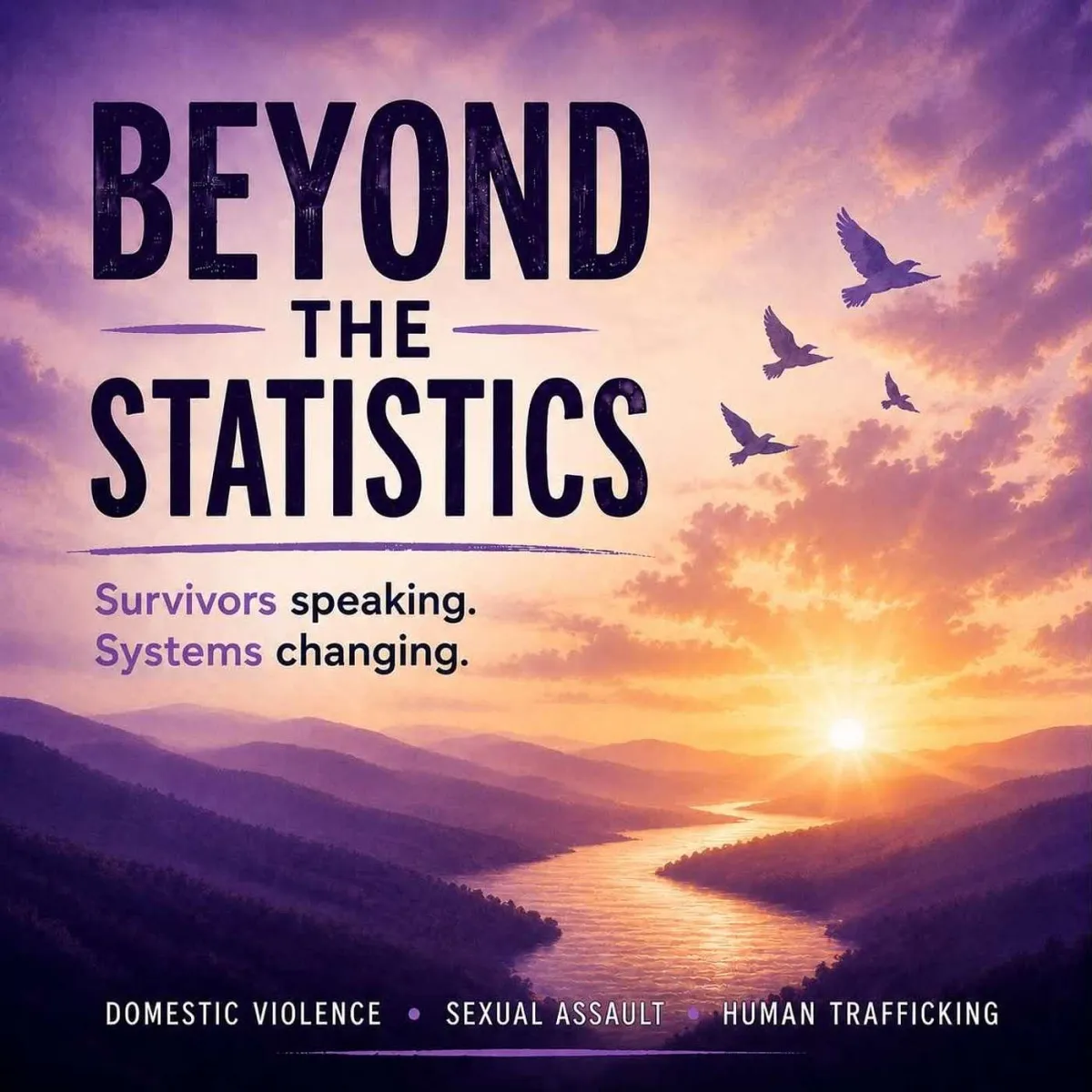
Healing After Abuse: When Your Body Still Feels Unsafe (Beyond the Statistics)
You can leave and still not feel safe. I know that from the inside — the danger ends, but the body keeps bracing: the tight chest, the startle, the exhaustion of watching every room. In this conversation with Ingrid on Beyond the Statistics, we talk about why that happens, and why healing starts with safety in the body before it can become anything else. It’s the ground my Amazing YOU Method is built on: safety first, then identity, then a life that’s actually yours.
You can leave an abusive relationship and still feel like your body is bracing for the next threat. Panic, numbness, hypervigilance, physical symptoms, and a nervous system that won’t seem to settle can leave survivors wondering why they don’t feel “better” yet.
In this episode of Beyond the Statistics, Ingrid sits down with Dr. Lisha Antiqua, a survivor who works in trauma recovery and somatic healing to talk about healing after abuse, somatic trauma, and nervous system regulation. They explore why trauma can remain in the body long after the immediate danger has passed—and why recovery involves more than simply understanding what happened.
Dr. Lisha explains the role of fight, flight, and freeze responses in trauma recovery and shares her Amazing You Method, which begins with establishing safety before rebuilding identity, self-trust, and boundaries. Ingrid and Dr. Lisha also discuss approaches including talk therapy, EMDR, EFT tapping, hypnosis, and timeline work—and why no single technique creates a perfectly linear path to healing.
They also explore:
• What somatic trauma can look and feel like
• Why survivors may remain hypervigilant after leaving abuse
• How chronic stress can affect the mind and body
• Where to begin when early recovery feels overwhelming
• Rebuilding identity after an abusive relationship
• Learning to trust yourself and your boundaries again
• Survivor’s guilt and the question, “Why did I survive?”
• Why healing from trauma is rarely a straight line
If you’re rebuilding your life after domestic violence, experiencing PTSD or CPTSD symptoms, or trying to understand why your body still reacts as though danger is present, this conversation offers a different way to understand recovery.